
One of the major carbon monoxide sources is the automobile engine and any fuel burning small engine. Many appliances in the home that use natural gas, propane, oil or other similar fuels are also producers of high levels of CO. These levels can be greatly increased if an appliance is malfunctioning or if the proper venting procedure of the appliance is not followed.
Please examine the chart to spot potential problems in your home...
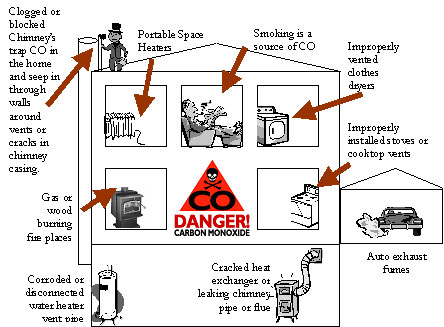
As you do a careful inspection of your home's CO producing appliances:
Keep an eye out for these signs of carbon monoxide...
If you are unable to perform the above inspection properly. Please hire a trained professional to inspect the possible carbon monoxide sources present in your home.
Don't become a statistic!
Remember carbon monoxide is a silent killer.
Why
not purchase a CO alarm for your home? A problem can develop at
anytime. For example, snow could cover a vent or flue pipe or a
condition can develop during very cold weather when a flue actually can
stop drawing the gases up and out the house. Many other accidents could
also occur.
Read about my very close call with CO...
|


Mar 21, 24 06:46 PM
Feb 17, 24 10:17 AM
Dec 11, 23 11:08 PM
By Val Riedman Copyright © 2007-2022 Indoor-Air-Health-Advisor.com
Build Your Own Website with Solo Build It!


New! Comments
Have your say about what you just read! Leave me a comment in the box below.