
Radon sump and pump systems are very desirable because of the potential for great air movement across the foot print of the basement. This is due to drain-tile or french drains placed in a bed of gravel often along the entire footing of the foundation. These drainage pipes are perforated and laid in a bed of gravel so rising water levels can enter the tubes and flow to the sump for discharge from the building. So the french drain pipes double as a great way for the radon fan to gather radon gas to the vent pipe and send it out above the building.
Please view the diagram and table below to decide if a radon mitigation will work with your sump system.
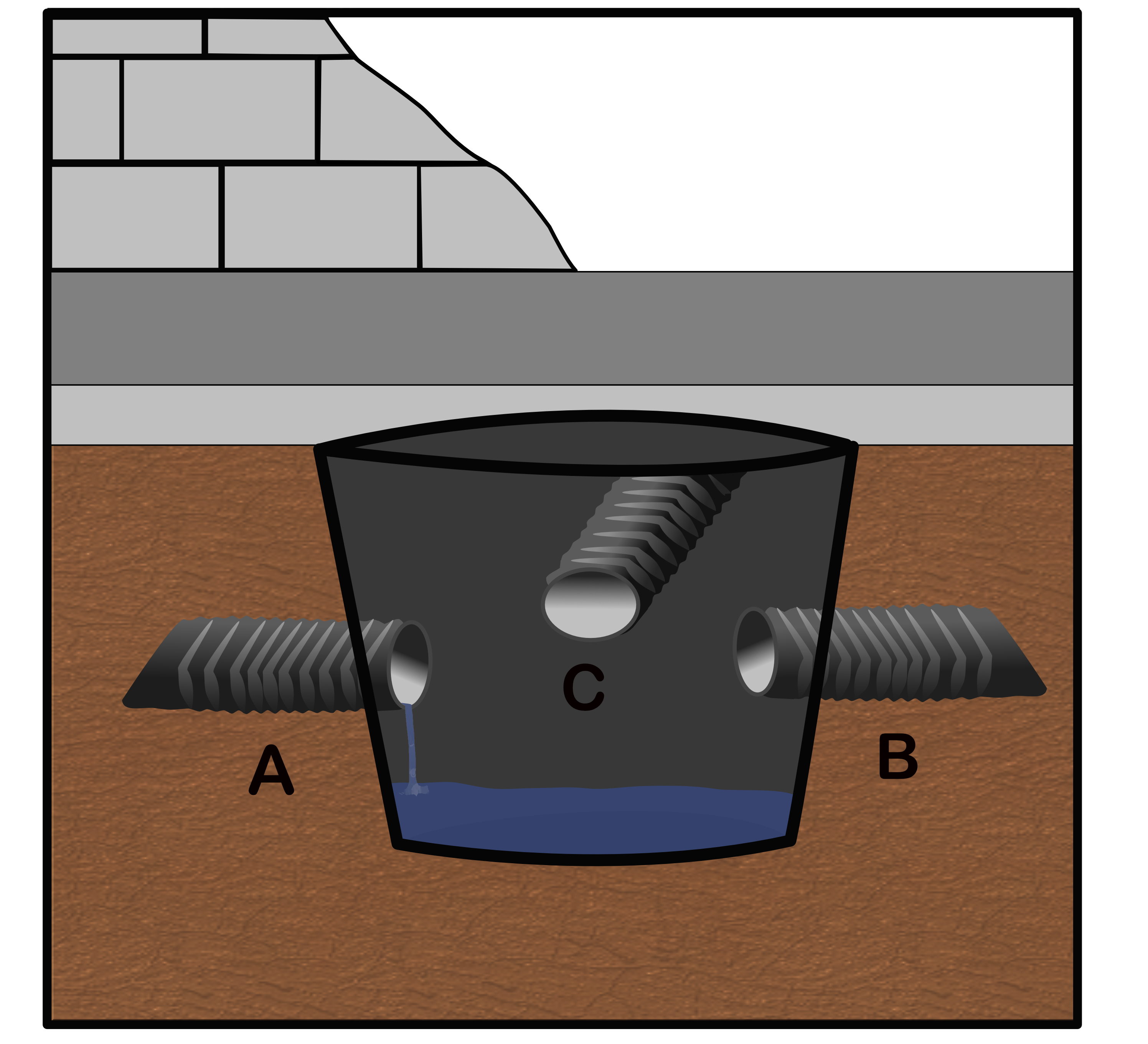
| Sump System Configurations and Radon Mitigation | ||
| Sump Set Up | Probable Situation | Will it work? |
| 2 pipes
(A+B) entering basin parallel to foundation |
Likely an interior drain-tile loop. | Excellent results can be expected. |
| 1 pipe (C) entering basin perpendicular to foundation | Usually means an exterior loop. Can be tied into an interior loop also. | Exterior systems can produce excellent results. Walkout basements may have only partial loops and daylight drains which can reduce effectiveness. |
| 1 pipe entering a sump centrally located in the basement | Likely an interior drain-tile loop | Excellent results can be expected. |
| 3 pipes (A,B,+C) | A combination interior and exterior loop. | Excellent
results can be expected. |
| No pipes with weep holes and or an open bottom to the soil. | No drainage pipes or gravel can be expected. | Not a good location for a radon vent pipe. |
Taking a look down the pipe with a flashlight or using a tape measure will verify the actually configuration of the system. Some times things aren't always what they seem to be, it's worth a look.
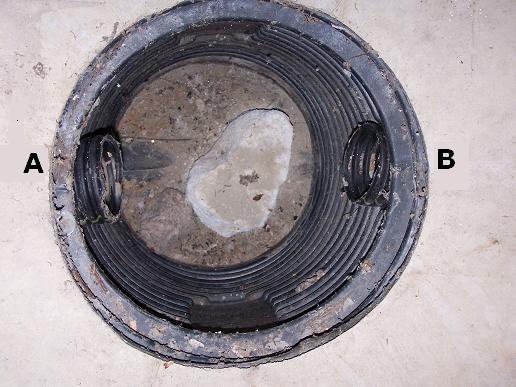
The vent pipe can either be located directly on top of the sump cover or into a hole made in the floor. If you have a sump pump in your pit that needs attention, placing a hole over the drain tile will allow for easier access to the sump when required. Or if your vent pipe's exit point from the basement is not near the sump, why not locate it there instead. Shorter pipe runs are always better. Just be sure that you can tap into the drain-tile or if you have gravel under the floor you can place the pipe just about anywhere.
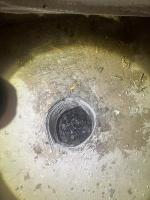
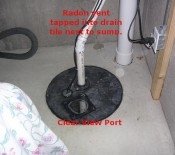
The radon vent is placed right over the drain tile in this photo. This is worthwhile if you ever anticipate going back into your sump to change the pump out.
Note: Cut a hole in the top of the tile to allow for good air flow.
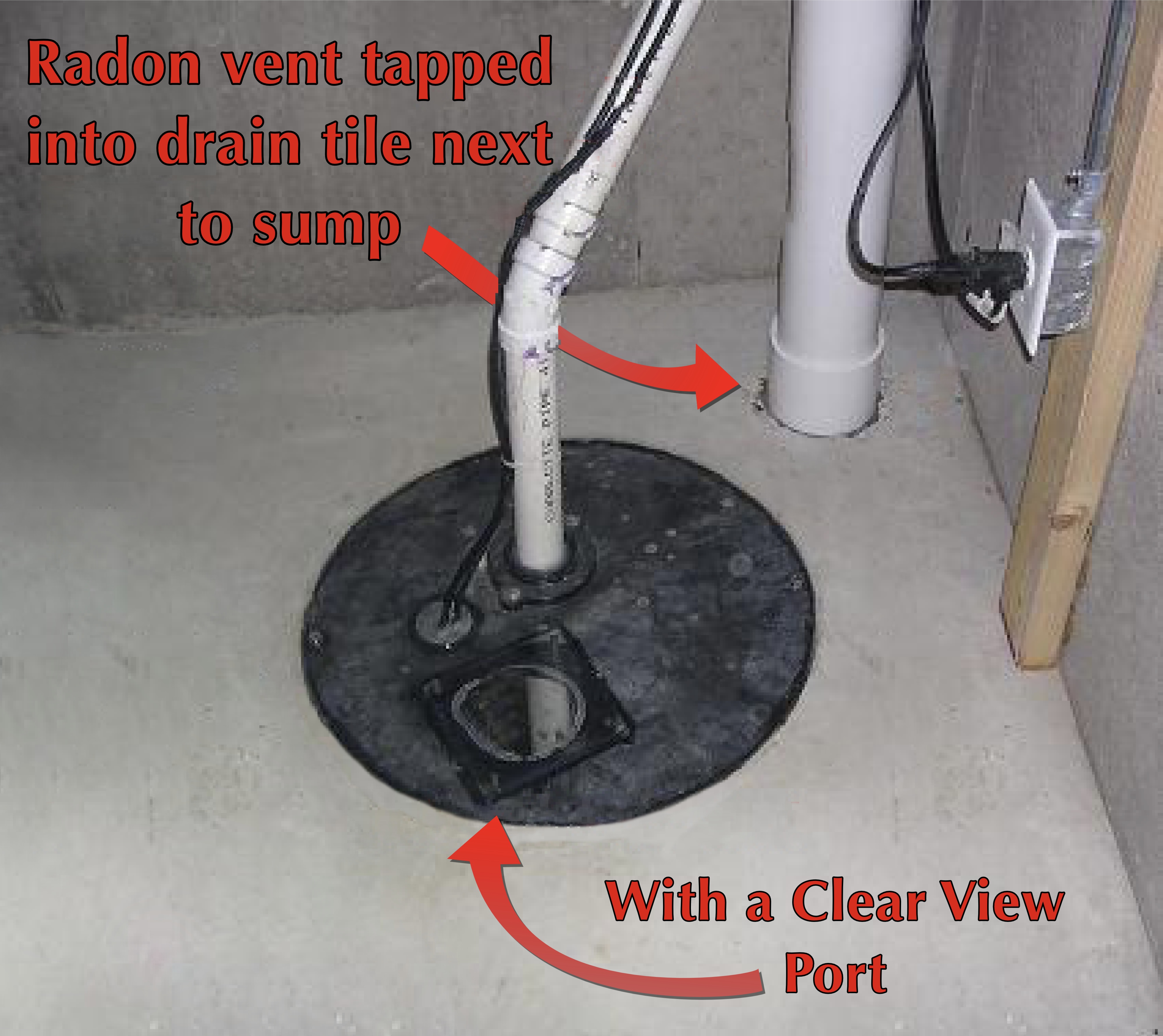
If the pipe is installed in a sump with a pump, plan ahead for an emergency. I use a coupling so the pipe can be moved out of the way when the sump pump needs maintenance.
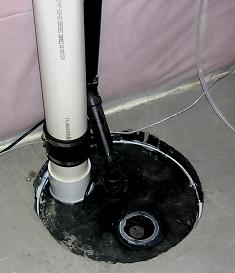
Note: with high air flows from drain-tile and gravel beds, 4" pipe is always the best bet.
For any radon mitigation sealing is very important. You don't want to draw the conditioned air out of your home and blow it out the roof.
So the sump requires a cover that can be sealed and clear is preferable to view water levels.
Here are some other considerations for sealing a sump for radon mitigation:
For more detailed info about radon mitigation sump covers and to view radon sump supplies please view them here....
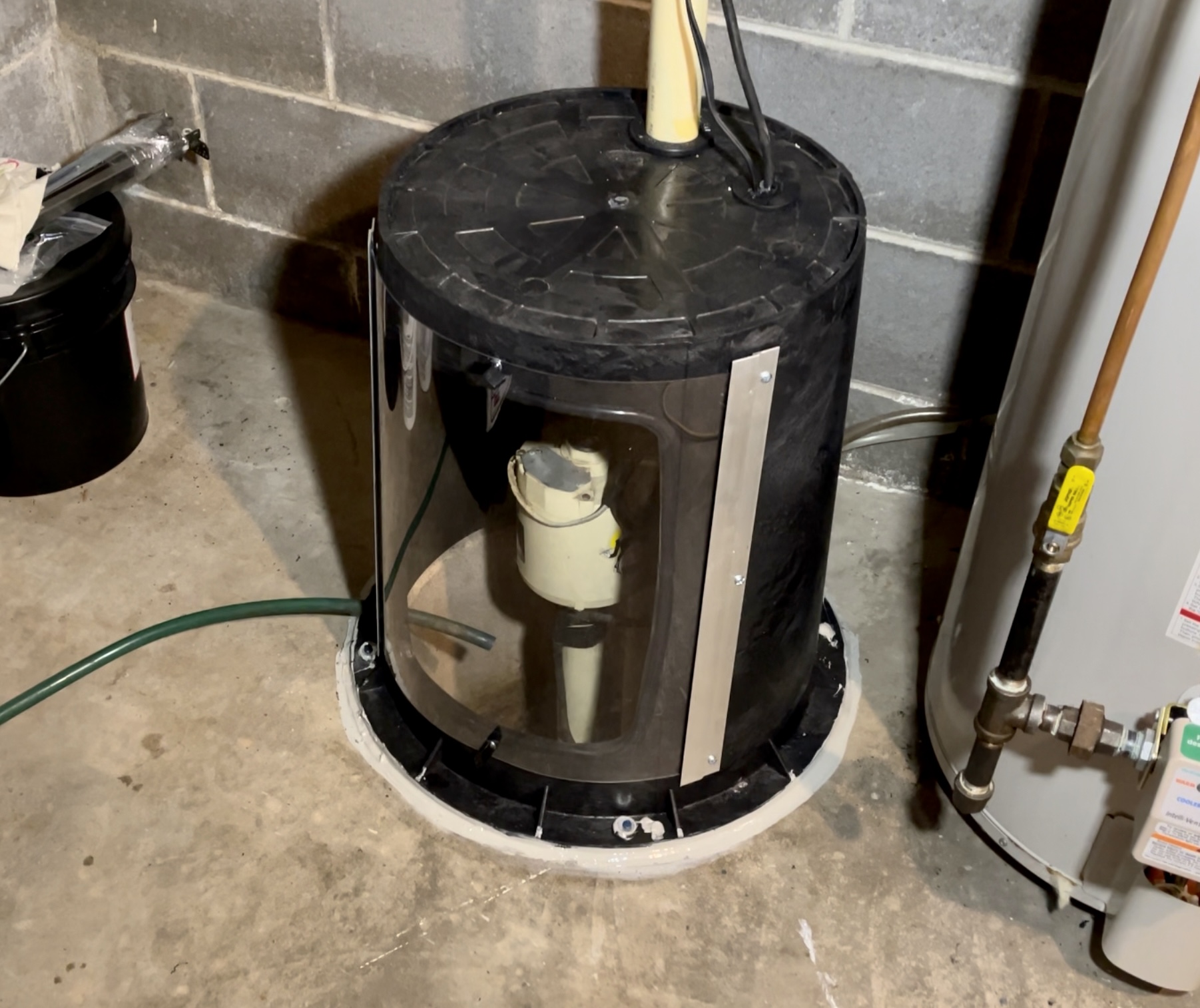
This is a pedestal sump cover after it’s installed. It gives an airtight seal but also a viewport so you can keep an eye on your pump and water levels.
Radon Mitigation Diagrams & Photos | Radon Mitigation Design Considerations | Vent Pipe Guidelines | Choosing a Radon Fan | Radon and Crawl Spaces | Radon and Sumps
Design Pages |


Mar 21, 24 06:46 PM
Feb 17, 24 10:17 AM
Dec 11, 23 11:08 PM
By Val Riedman Copyright © 2007-2022 Indoor-Air-Health-Advisor.com
Build Your Own Website with Solo Build It!


New! Comments
Have your say about what you just read! Leave me a comment in the box below.